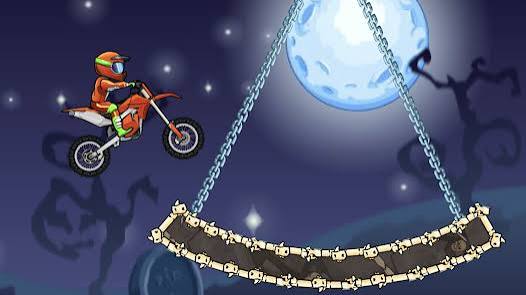
Radical Pool Ramp: Take Off Cleanly and Land with Confidence
The Radical Pool Ramp looks like an invitation to hold the throttle and fly as far as possible. In practice, the challenge is more precise. A successful attempt depends on the speed you carry into the ramp, the angle of the motorcycle at takeoff, and the patience to correct the bike without over-rotating.
Why the approach matters
A jump begins before the front wheel touches the ramp. If you arrive too slowly, the motorcycle may lose forward travel and fall short. If you arrive too quickly, the bike can overshoot the safest landing area. The ideal approach uses steady acceleration across the preceding straight and a small adjustment once the complete ramp becomes visible.
Keep the motorcycle settled during the approach. Unnecessary wheelies or late jumps change the suspension and body angle just when stability matters most. Let the ramp create the lift. Your job is to deliver balanced speed and then guide the flight.
Choose a controlled takeoff speed
There is no single perfect speed for every attempt because your line and previous landing affect the approach. Use visual cues instead. If the landing platform is wide and close, moderate speed is enough. If the gap is long, build momentum earlier. Avoid a last-second burst of acceleration, which can raise the front wheel and produce an awkward takeoff.
- Accelerate on the flat section, not halfway up the ramp.
- Keep both wheels aligned with the ramp surface.
- Release the throttle briefly if the front rises too quickly.
- Use Space only when extra height is genuinely required.
- Commit to the jump once the bike reaches the ramp face.
Control the bike in the air
After takeoff, allow a short moment to see the bike’s natural rotation. Ramps already influence pitch, so an immediate long input can double the effect. Apply A for a smooth backward rotation or D for forward rotation. Short presses are easier to reverse and help preserve a natural-looking arc.
The highest point of the jump is the best moment to judge your landing. At the apex, vertical motion slows and the landing surface is usually visible. Compare the line through both wheels with the slope ahead. If the front wheel is too high, make a gentle forward correction. If the nose points down sharply, use a small backward correction.
Prepare for touchdown
A good landing is not perfectly flat unless the road is flat. The motorcycle should match the angle of the surface. On a downhill landing, the front wheel can sit slightly lower. On an uphill landing, the front should be slightly higher. Matching the slope spreads the impact across both tyres and keeps forward momentum.
- Identify the landing slope as soon as it enters view.
- Complete large rotation before the descent becomes fast.
- Use only small corrections during the final part of the fall.
- Avoid braking in midair unless you are already aligned.
- Accelerate again after the tyres establish stable contact.
Recovering from an imperfect jump
Not every takeoff will be ideal. If the motorcycle is under-rotated, focus on placing the rear wheel first rather than forcing a complete stunt. If it is over-rotated, use the opposite tilt and stop adding spin. A survivable landing is more valuable than a stylish crash.
When one wheel touches first, do not instantly hold the throttle. Give the suspension a moment to settle. A short neutral phase prevents the bike from bouncing into another rotation. Once both wheels follow the road, resume acceleration smoothly.
Common ramp errors
Late braking is a major problem because it compresses the bike near takeoff and removes needed distance. Another error is pressing Space at the lip without understanding the added height. Extra lift also creates extra airtime, which means more time for unwanted rotation. Finally, many riders stare at the bike rather than the landing. Keep the motorcycle in your peripheral vision and place most attention on the road ahead.
Build a reliable ramp routine
Practice the ramp without attempting a flip until you can land three times in a row. Then add one short rotation input and learn where to release it. After the landing becomes dependable, experiment with slightly faster approaches. Changing one variable at a time makes improvement clear and prevents random results.
The Radical Pool Ramp becomes enjoyable when takeoff and landing feel connected. Build speed early, remain stable on the ramp, rotate with restraint, and match the landing slope. This method produces safer runs, cleaner stunts, and faster exits into the next section.
Radical Pool Ramp questions
Do I always need Space at the ramp?
No. The ramp already creates lift. Use Space only when normal momentum falls short or a hazard requires extra clearance. Unnecessary height creates a harder landing.
What is the safest first stunt?
Begin with a small backward rotation because the rising ramp naturally supports it. Release early, align the wheels, and complete several safe landings before attempting a full flip.
Why does the bike overshoot?
The approach speed is probably too high. Choose an earlier braking marker on flat road, make the reduction there, and release the brake before climbing. This preserves stability while shortening the arc.
Use the same starting position and input timing across several attempts. Consistency reveals whether distance or rotation needs adjustment and prevents each landing from feeling random.
Put the technique into action
Return to the pool track and practice one clean launch at a time.
Play Now